
JĒKABPILS, Latvia — 26 August 2026. Wolfram Europa today announced a €200 million investment to build a vertically integrated energetics complex near Jēkabpils, Latvia, on a 40-hectare site secured under a long-term land agreement with Latvijas Valsts Meži, the Latvian state forestry company. The complex will synthesise explosives, manufacture warheads, and counter-mobility solutions, in three phases from 2027. Once fully operational, the project will create 200 high-skill jobs in the region.
The announcement was made at Jēkabpils by Viktors Valainis, Minister of Economics; Edgars Tavars Minister of Smart Administration and Regional Development; Airis Rikveilis, State Secretary of the Ministry of Defence; Raivis Ragainis, Chairman of Jēkabpils County Municipality; and Magnus-Valdemar Saar, CEO of Wolfram Europa.
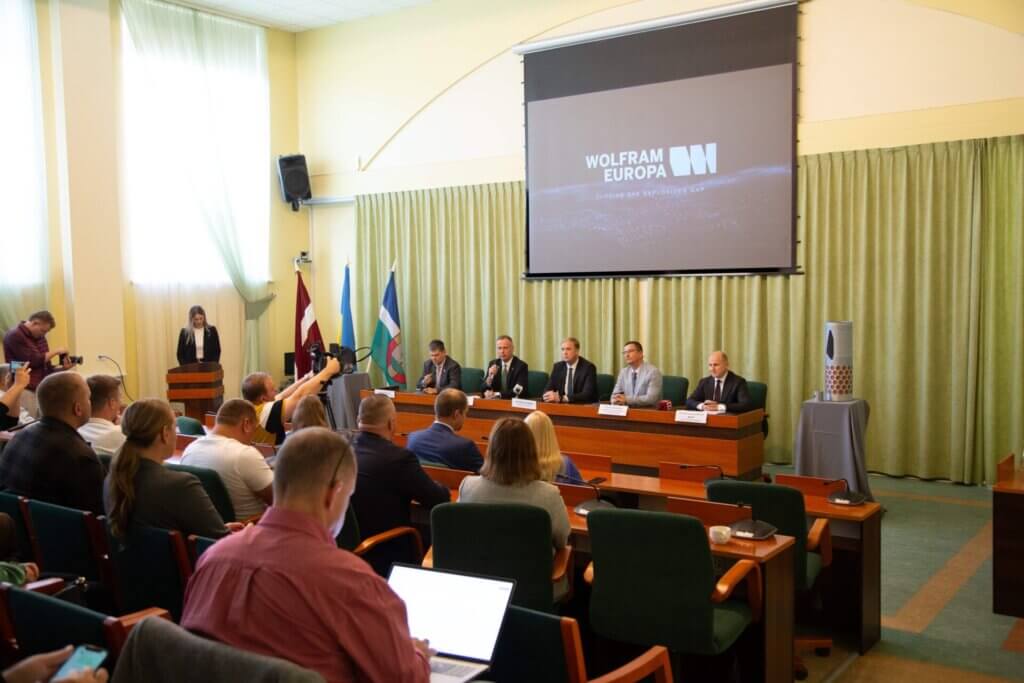
Wolfram Europa Press Conference in Jēkabpils, Latvia.
“Investments of this scale represent a significant step forward in the development of Latvia’s defence industry and, at the same time, demonstrate Latvia’s ability to attract strategically important industrial projects to its regions. Our goal is to build a competitive and export-oriented defence industry in Latvia that strengthens national security, creates high-value-added jobs and makes a long-term contribution to economic growth. The €200 million investment and approximately 200 new jobs in Jēkabpils county represent a significant contribution both to the development of the region and to Latvia’s overall industrial capacity,” emphasizes Viktors Valainis, Minister of Economics.
At full build-out the complex will synthesise 300 tonnes of RDX or 100 tonnes of HMX, with the possibility of further expansion capacity. It will mix end-use compositions such as Composition B, Composition H, Composition A-3, A-4 and A-5, C-4, PBX and others. It will fill and assemble 100,000 anti-tank mines and 200,000 warheads a year. And it is designed to hold up to 1,200 tonnes net explosive quantity — a buffer sized to keep supply running through disruption and crisis.
“The establishment of such a company strengthens the involvement of Latvia’s defence industry, promotes the development of technologies and expertise, and demonstrates Latvia’s ambition to become a significant regional hub for defence industry and technology development. At the same time, it represents an important benefit for the municipality and contributes to broader economic development. In the long term, the development of Latvia’s defence industry will create additional opportunities to strengthen our national security, resilience of supply chains, and cooperation with our Allies.” said Airis Rikveilis, State Secretary of the Ministry of Defence.
Wolfram Europa plans to build out the capacity to become the largest explosives manufacturer in Europe. The continent already has far less capacity than it needs and demand will only increase further. The Jēkabpils complex will provide a significant capacity increase for both explosives and warheads, and it will become a blueprint for modern explosive development. Latvia will become an exporter of technologies rather than importer.
Europe is undertaking the largest defence-industrial mobilisation in generations. Billions are being invested in missiles, artillery ammunition, air defence, drones and autonomous systems. But every missile, artillery shell, drone warhead, mine and bomb ultimately depends on explosives. The continent is outproduced in explosives by Russia roughly three to one, and the gap is widening. Europe is scaling its weapons faster than the chemistry that makes them lethal. Explosives and energetic materials remain one of the least visible, and most consequential, gaps in Europe’s defence industrial base. Without European explosives, there can be no European deterrence.
“For the last 35 years, Europe has been scaling down its explosives and munitions industry — and technological development has stalled with it. Now Europe is rearming, but investment is still focused mainly on platforms and final assembly. That is the explosives gap: Europe is scaling its weapons faster than the explosives and warheads that make them effective. Wolfram Europa was created to do two things: close that capacity gap and
make the technological leap — producing world-class explosives and warheads with the most modern technologies and manufacturing methods. Latvia has decided to create the conditions for this production. Jēkabpils will not serve Latvia alone — Latvia will host strategic production capacity for Europe. It will be our first major site, but not our last,” said Magnus-Valdemar Saar, CEO of Wolfram Europa.
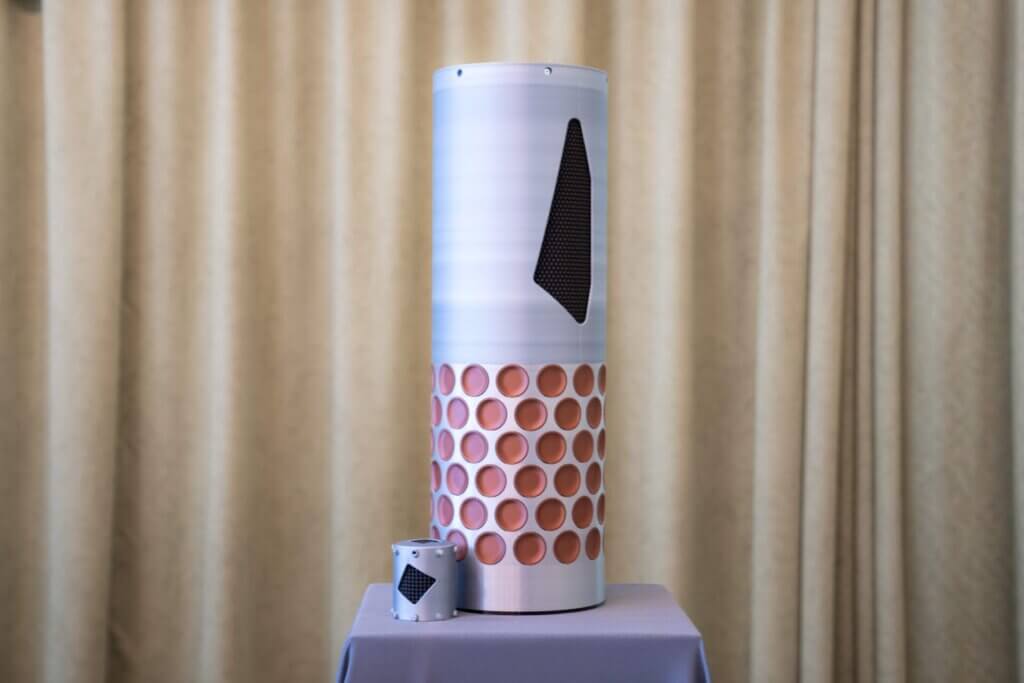
Wolfram Europa Medium and Small Sized Warheads
Wolfram Europa is choosing not merely to identify that problem, but to act on it and Latvia is providing the conditions to make that possible. By enabling new explosives manufacturing, Latvia is positioning itself at the upstream end of Europe’s defence industrial rebuild.
The complex is built for that role. It is vertically integrated — synthesis, mixing, fill and assembly on one controlled site — designed from the outset for mass manufacturing and built to a low-footprint, relocatable pattern so that output can be scaled and repositioned at times of need. Designed for NATO explosive safety standards and licensed under Latvian regulation, it is engineered for what this part of the chain now demands: volume, resilience and security of supply.
“It is currently of strategic importance that we are a strong component of the unified NATO alliance and can provide significant support to our allies. We therefore greatly appreciate the company’s decision to develop its production facilities right here in Jēkabpils county; this represents a vital contribution not only to the local area’s development through new job creation but also to the broader security of the Baltic region. We are also delighted that companies of this calibre see potential in our municipality, and we remain open to the arrival and growth of other new businesses in Jēkabpils county.” said Raivis Ragainis, Chairman of Jēkabpils county municipality.
Edgars Tavars, Minister for Smart Administration and Regional Development, added: “This is a massive and very significant investment for the Jēkabpils region. It will create many new jobs. This is important for the Jēkabpils region’s development, economy, and national security. My task is to ensure that unnecessary bureaucracy does not stand in the way of this project and that the investment can flow into Jēkabpils.”
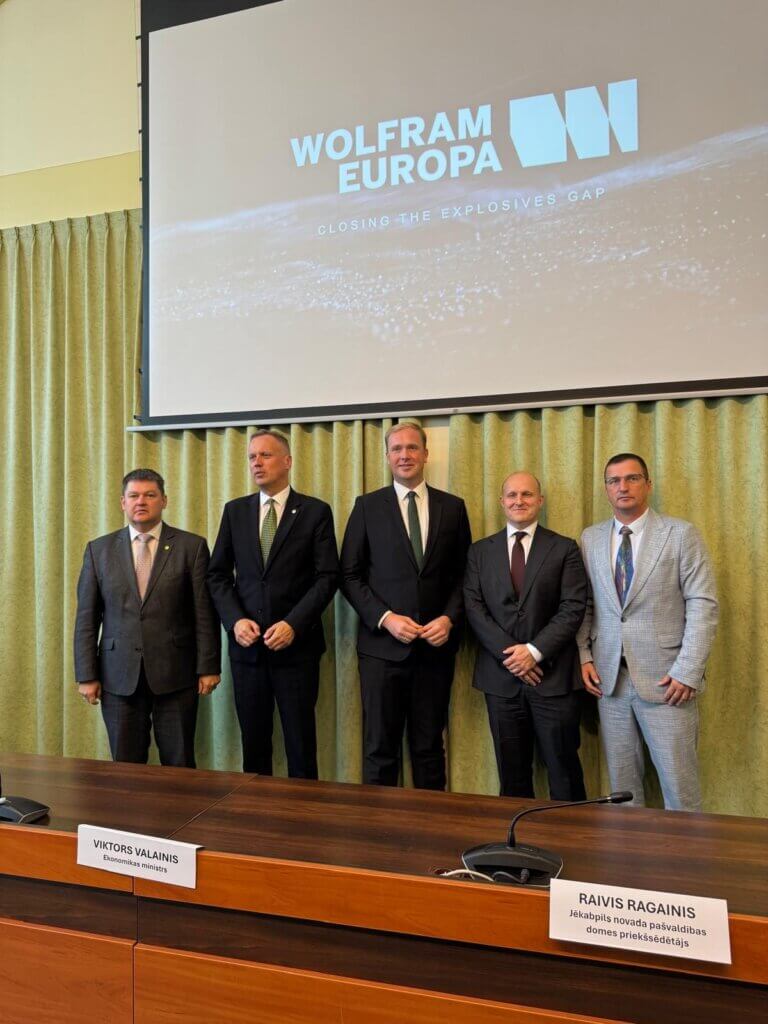
From left; Airis Rikvelis, Edgars Tavars, Viktors Valainis, Magnus-Valdemar Saar and Raivis Ragainis.